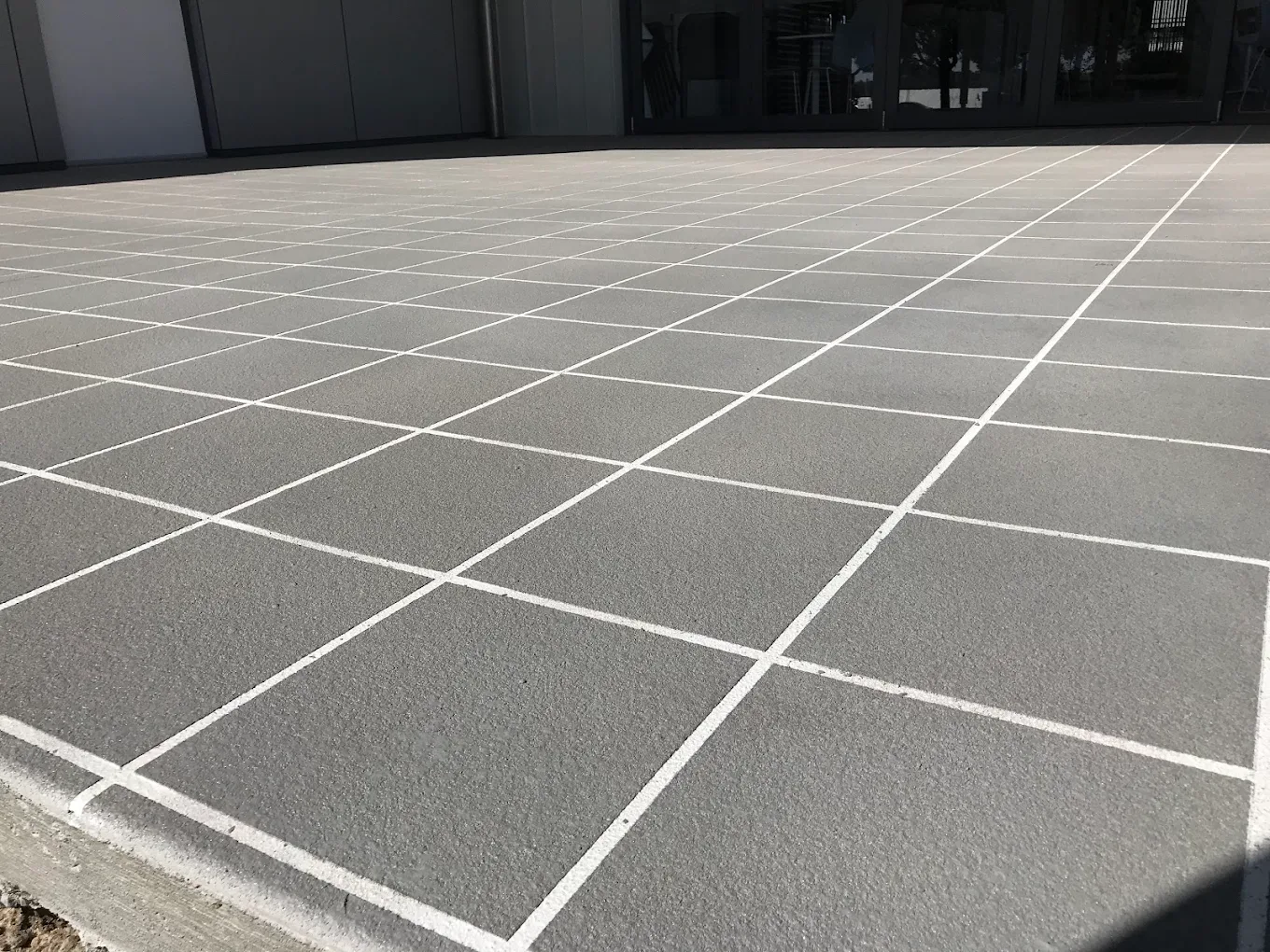
Grey stencil concrete in a large square tile pattern with white joint lines outside a building
The short answer
Choose the base colour from the fixed elements of your home - roof, brickwork or render, and window frames - never from a brochure alone. Then choose pattern scale to suit the size of the area: large formats for wide modern frontages, smaller brick patterns for character homes and compact courtyards. Keep joint colour within a couple of shades of the base unless you specifically want the pattern to shout.
Two jobs with identical preparation and identical products can look completely different. The variables are tone and scale, and both are decided in about fifteen minutes on site.
Key takeaways
- Pull the base colour from roof, brick or render, not from a chart.
- Large formats suit wide contemporary frontages; small formats suit cottages.
- Low-contrast joints read as stone; high-contrast joints read as pattern.
- Always view a sample on site, in daylight, before approving.
Start with the house, not the catalogue
Pull the base tone from something permanent: brickwork, render, limestone walling or the roof. A colour chosen against the house always outperforms a colour chosen from a chart indoors.
In Perth's western suburbs that usually means limestone and bone tones; in the eastern suburbs, warmer sands and ochres drawn from brick.
Keep joint contrast low
The most common mistake is a joint tone too dark against the base. High contrast reads as a printed pattern from the street. One or two steps darker is enough to describe the shape of the stone.
Scale the pattern to the area
- Wide double driveways: random flagstone, large ashlar, large-format tile
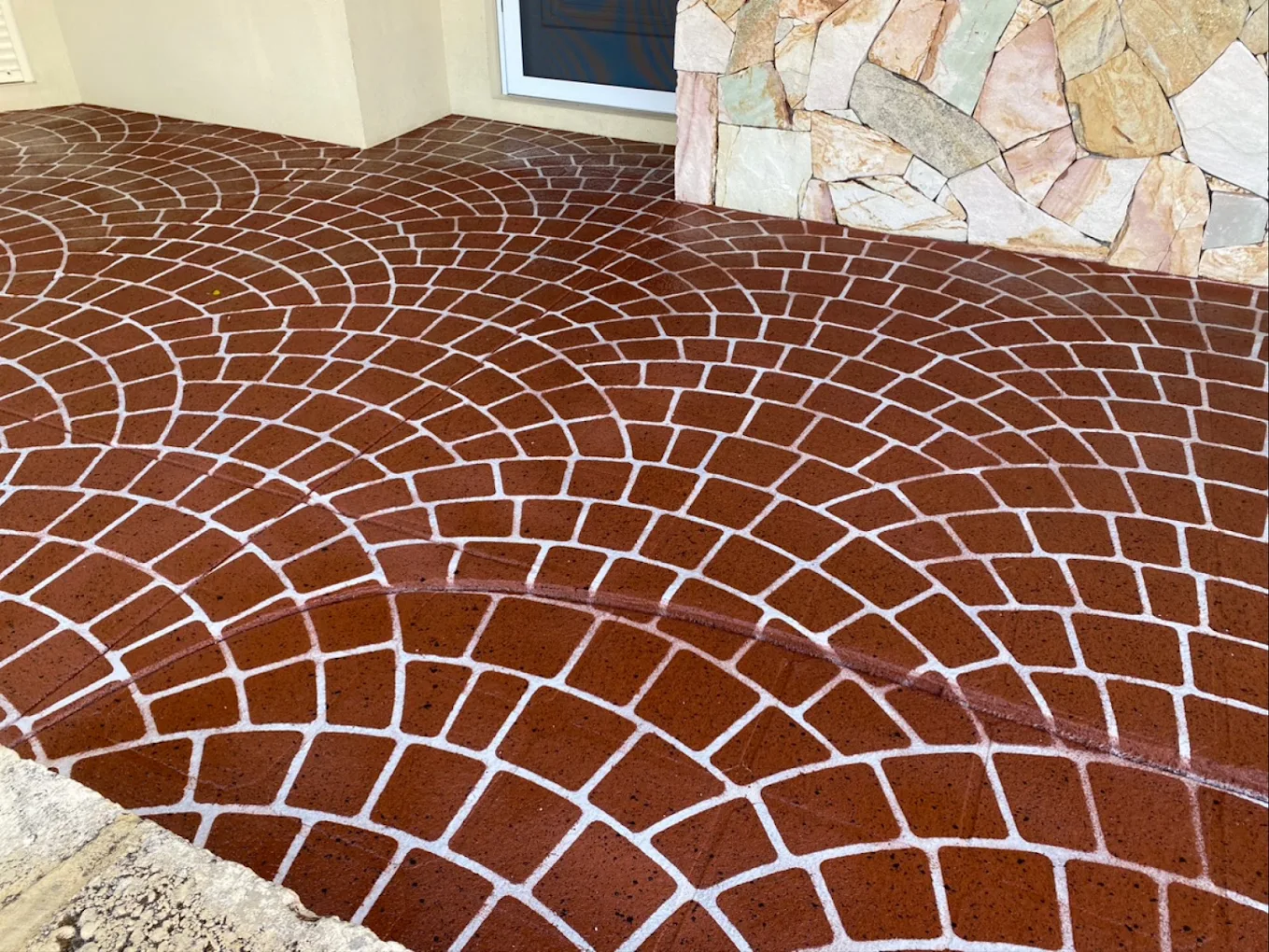
- Standard single driveways: ashlar slate, European fan
- Paths under 1.2 m: running brick bond, small cobble
- Covered alfrescos: large-format tile, kept plain and calm
Test in two lights
Sample in morning and late-afternoon light before committing. Perth's afternoon light is warm and strong, and it can push a neutral grey noticeably brown.
Heat and glare
Dark charcoal looks superb in photographs and punishes bare feet. For pool surrounds and alfrescos, go lighter than instinct suggests. For driveways, mid-tones hide tyre marks better than either extreme.
Sealer sheen
Gloss saturates colour and shows every scuff. Satin is the safe default for most homes. Matte reads most like natural stone and is the right call on exposed aggregate overlays.
Colour families that work in Perth
- Sand and bone: limestone homes, coastal properties, pool surrounds
- Warm red-brown and ochre: red brick character homes and older suburbs
- Mid grey: the safe default for mixed or undecided palettes
- Charcoal: dark-glazed contemporary homes, best kept out of full-sun barefoot areas
Matching pattern to the area
- Wide double driveway: large-format square or ashlar patterns
- Narrow side path: running bond brick or small tile so the scale is not lost
- Courtyard or alfresco: large format with low-contrast joints for a calm floor
- Commercial entry: simple, repeatable pattern that hides traffic wear
How we sample
We prepare samples on site and look at them against the actual wall and roof in daylight, because colour under a showroom light is meaningless. We also look at them wet, since a sealed surface darkens when it rains.
See finished examples in the gallery, then talk it through on a free quote visit.
Frequently asked questions
- What colour spray paving suits a red brick house?
- Warm red-brown, terracotta and ochre bases drawn from the brickwork sit best. Cold grey tends to fight red brick unless the house has been rendered or painted.
- Does a dark driveway get too hot?
- Dark surfaces absorb noticeably more heat. That is fine on a driveway you walk across in shoes, but not for a barefoot pool surround or alfresco.
- Which pattern is the most timeless?
- Large-format square or ashlar layouts with low-contrast joints age best. Heavy small-brick patterns with white joints tend to date a contemporary frontage.
- Can I see the colour before committing?
- Yes. We sample on site against your wall and roof, in daylight and wet, before the job is booked.
Related