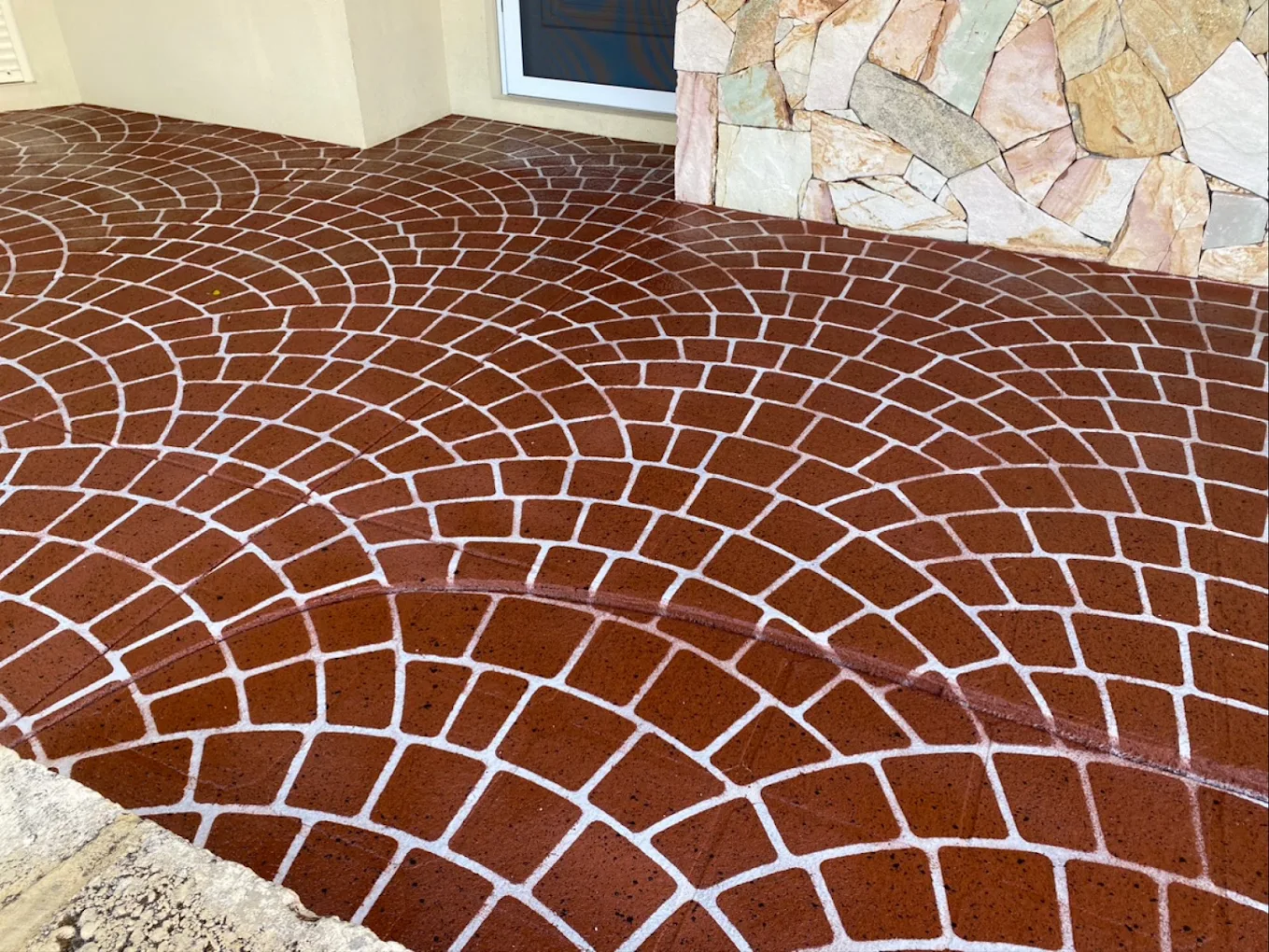
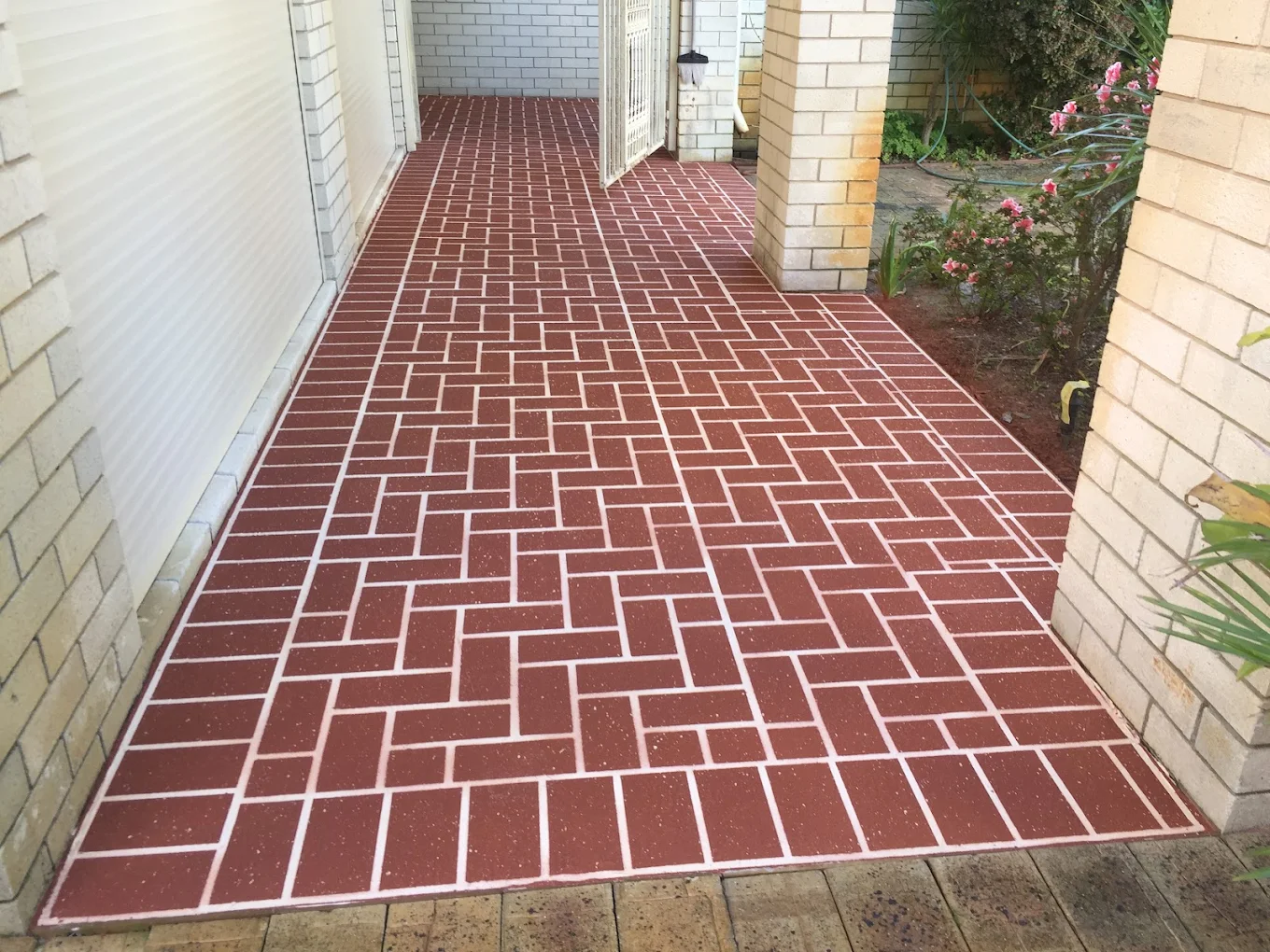
Red brick-pattern spray-on paving along a residential side path between brick walls
The short answer
A correctly prepared spray-on paving surface lasts many years - the overlay itself is a cement-based layer bonded to your slab. What wears out first is the sealer, not the surface. In full Perth sun expect to re-seal every three to five years, and every two to four years within a few streets of the coast. Failures we are called to fix are nearly always preparation failures, not product failures.
Ask three contractors how long spray paving lasts and you will get three numbers. That is because they are answering different questions: how long the overlay lasts, and how long the sealer lasts.
Key takeaways
- The sealer is the consumable; the overlay is not.
- Re-seal every 3 to 5 years inland, 2 to 4 years coastal.
- Bond failure traces back to preparation almost every time.
- Cracks in the slab will eventually telegraph through any thin overlay.
The overlay: a long-life layer
The bonded cement overlay itself is durable. On a sound, well-prepared slab it can remain intact for well over a decade - it is cementitious, it is thin, and it moves with the substrate rather than against it.
What kills an overlay early is almost never traffic. It is preparation failure: coating over laitance, oil contamination or a previous failed product.
The sealer: a consumable
The sealer takes the UV, the tyre scrub, the sprinkler minerals and the sunscreen. In Perth, expect three to five years before it needs renewal. North and west-facing driveways in full afternoon sun sit at the short end.
A re-seal is a small fraction of the original cost. Skipping it is what turns a maintenance job into a resurfacing job.
Signs the sealer is due
- The surface looks chalky or dusty when dry
- Colour looks washed out, especially in the sun-facing half
- Water no longer beads and darkens the surface instead
- Tyre marks and stains are harder to clean off
What shortens the life
- Reticulation spraying directly onto the surface daily
- Standing oil or fuel left uncleaned
- Turning tyres hard on the same spot (dry steering)
- Harsh acid cleaners and stiff wire brushes
What extends it
Rinse it occasionally, clean spills before they sit, adjust sprinklers off the surface, and re-seal on schedule. Do those four things and you are comfortably at the top of the range. Our aftercare stage sets these out in writing at handover.
What shortens the life of a surface
- Skipped or rushed preparation - the single biggest cause of delamination
- Sealing over trapped moisture, which clouds and lifts the coating
- Turning tyres on a hot surface, which scuffs sealer on driveways
- Sprinkler overspray with bore water, which stains iron-orange
- Leaving leaf litter and organic growth to sit through winter
A realistic Perth maintenance calendar
- Weekly to monthly: sweep or blow the surface clear
- Every few months: wash with water and a mild detergent, no acids
- Annually: check the sealer sheen and treat any organic growth in shaded areas
- Every 3 to 5 years inland, 2 to 4 coastal: re-seal
How to tell when it is due
Wet a small area with a hose. If the water beads and sits, the sealer is intact. If it soaks straight in and darkens the surface, the sealer has worn through and a re-seal is due. Re-sealing on time is far cheaper than restoring a surface that has been left bare - the same logic covered in preparation, sealing and aftercare.
Frequently asked questions
- How long does spray-on paving last before it needs redoing?
- The overlay itself is long-lived when prepared properly; you maintain it by re-sealing rather than replacing it. Full resurfacing is normally only needed if the slab underneath fails or the original preparation was inadequate.
- How often should I re-seal in Perth?
- Every three to five years for an inland driveway in full sun, and every two to four years for coastal properties exposed to salt and windblown sand.
- Will it crack?
- The overlay will not crack on its own, but movement in the slab beneath it will telegraph through. Existing control joints are carried through the finished pattern to give that movement somewhere to go.
- Does it fade in the sun?
- Colour is protected by the sealer. Kept sealed, fade is minimal; left bare through several Perth summers, any coloured surface will lighten.