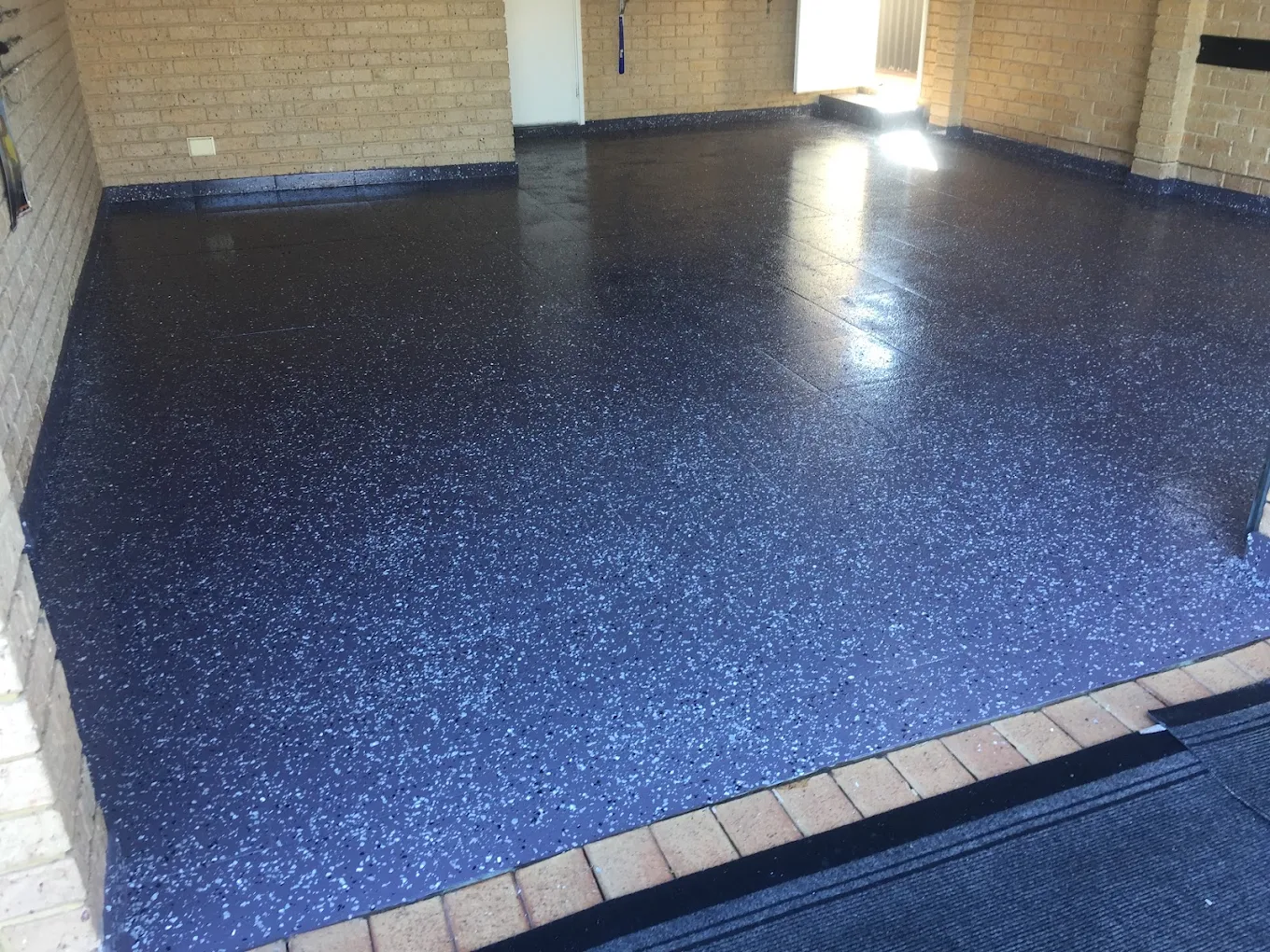
Onyx flake epoxy garage floor with a high-gloss finish over a dark base
The short answer
Longevity is bought at preparation, not application. Every job should include a mechanical clean or grind, degreasing, crack chasing and filling, edge repairs where needed, and a bonding primer before any overlay goes down. Afterwards, the sealer is what you maintain: keep the surface swept and washed, avoid acids, and re-seal every three to five years inland or two to four years on the coast.
We get called to assess failed decorative concrete regularly. In the overwhelming majority of cases the coating did not fail - the bond did, because the surface underneath it was never properly prepared.
Key takeaways
- Preparation is where the money and the lifespan actually go.
- Trapped moisture is the most common cause of a cloudy, lifting seal.
- Never clean a decorative surface with acid or a harsh solvent.
- Re-seal on schedule, before the surface is bare.
What proper preparation involves
- High-pressure clean to remove grime, growth and loose material
- Degreasing of oil-affected zones, repeated until the substrate takes water evenly
- Grinding to remove laitance, old coatings and sealer residue
- Crack chasing, filling and edge rebuilding
- Priming so the overlay bonds mechanically and chemically
The water test
A simple field check: splash water on the prepared slab. If it darkens evenly and soaks in, the surface is open and ready. If it beads anywhere, there is contamination or residual sealer and coating over it will fail in that spot.
Sealing properly
Two coats, applied in the right conditions, is the standard. Sealing in direct summer heat or with rain forecast within the cure window causes clouding, blistering and poor film formation.
Non-slip additive, where required, goes into the final coat and must be back-rolled to an even density. See non-slip coatings.
Your first two weeks
- Keep vehicles off for the period we specify - usually three to five days
- Keep reticulation off the new surface for two weeks
- No dragging bins, furniture or trailer jockey wheels
- Clean any spills promptly rather than letting them sit
The ongoing routine
Rinse with a hose or a gentle pressure wash occasionally, use a pH-neutral cleaner rather than acid, keep sprinklers pointed at the garden, and book a re-seal every three to five years. That is the whole maintenance program.
The preparation sequence in full
- Assess the slab: soundness, moisture, existing coatings, drainage falls
- Mechanically grind or high-pressure clean back to sound concrete
- Hot degrease oil-contaminated areas and treat organic growth
- Chase out and fill cracks; rebuild spalled or broken edges
- Mask adjacent glass, render, coping and planting
- Prime with a bonding coat and allow it to flash off before overlay
Cure and access times
- Light foot traffic: usually the day after sealing
- Furniture and pots: several days, and use protective feet
- Vehicles: typically five to seven days, weather dependent
- Turning wheels on a stationary vehicle: avoid for the first few weeks
Aftercare that actually matters
- Sweep or blow regularly - grit underfoot is what dulls a sealer
- Wash with water and mild detergent only
- Keep bore-water sprinklers off the surface to avoid iron staining
- Lift oil spills promptly with an absorbent, not a solvent
- Book the re-seal before the surface stops beading water
Frequently asked questions
- How do I clean a spray-on paved driveway?
- Sweep regularly and wash with water and a mild detergent. Avoid acid cleaners, harsh solvents and close-range high-pressure blasting, all of which damage the sealer.
- When can I drive on a newly resurfaced driveway?
- Typically five to seven days after sealing, depending on weather. Foot traffic is usually fine the day after. Your quote confirms the times for your job.
- Can I pressure wash it?
- Gently, at distance, with a wide fan tip. Close-range blasting will cut the sealer and can lift the pattern edges.
- What happens if I never re-seal?
- The colour dulls, the surface starts absorbing stains and oil, and organic growth takes hold. Restoring a bare surface costs far more than re-sealing on time.